
How fast can you get sanitation out after a disaster hits North Las Vegas?
Speed depends on what's already loaded and how bad the roads are. During a storm response we stage standard porta potty rental units and handwashing station rental equipment ahead of forecasted weather, so trucks roll the moment a street opens. A single delivery fee, typically 100 to 500 dollars depending on distance and access, covers getting the unit on site. If a driveway is washed out or blocked by debris, our dispatcher will ask about access before confirming a delivery window, because a roll-off truck alone needs about 60 feet of straight clearance to set anything down.
Emergency requests get priority over routine swaps. That means a scheduled cleaning on a construction job might slide a day so a shelter or a flooded neighborhood gets served first. If your situation cannot wait for a normal callback, use emergency porta potty rental or emergency septic service instead of the standard quote form, and say "disaster" in the notes. For anyone coordinating a multi-site response across North Las Vegas, construction site services covers the fencing, power and dumpster side of the same job.
What kind of sanitation actually gets used in a disaster response?
Shelters and command posts need different gear than a single flooded house. A shelter housing dozens of displaced residents runs like a small worksite: OSHA 1926.51(c) sets 1 toilet for 20 workers or fewer on a construction site, and that same ratio is the baseline planners use for temporary population counts when nothing else applies. For anyone running a longer-term site, how many porta potties do i need walks through the math per headcount.
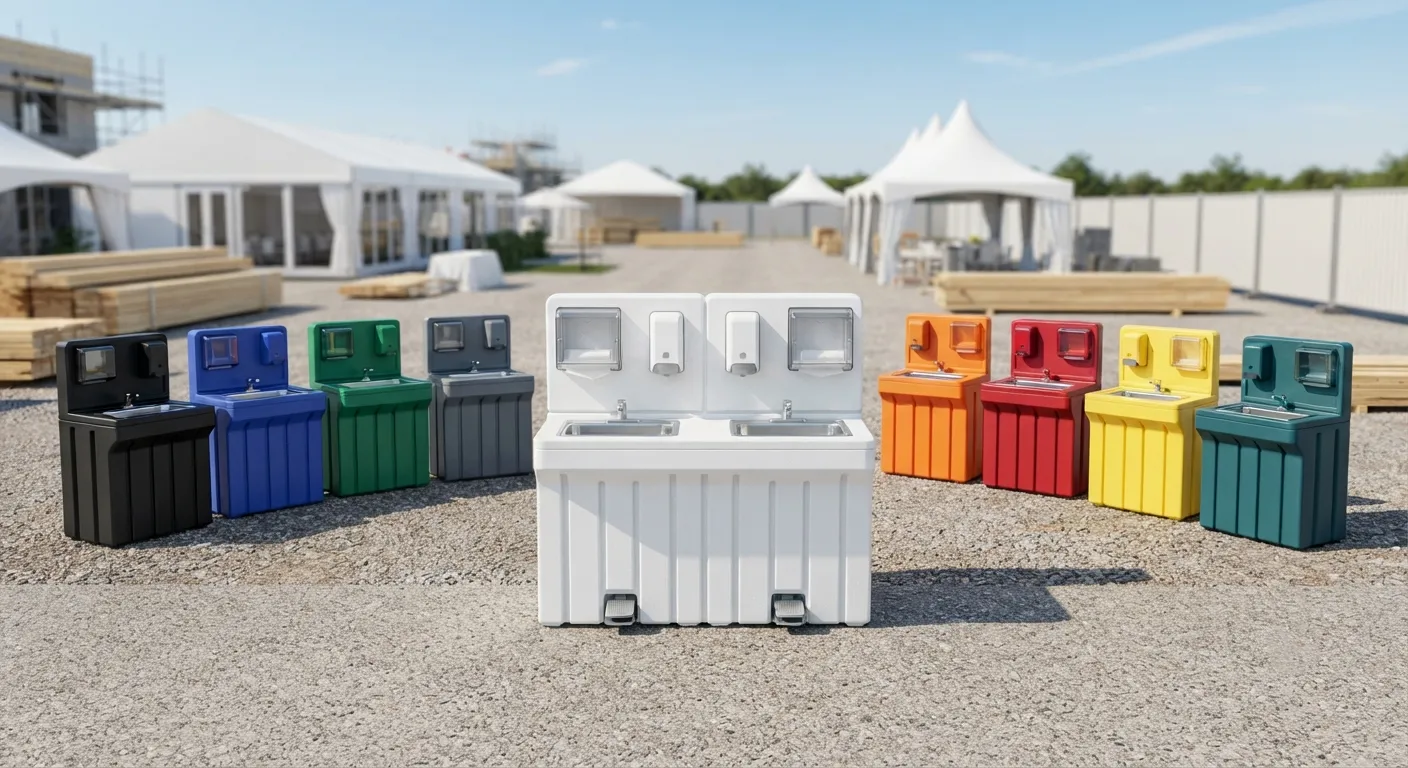
At minimum a disaster response kit includes standard units, a few ada accessible porta potty placements since ADA Standards section 213.2 requires at least 5 percent of a clustered group to be accessible, and portable sink rental or hand sanitizer station rental stations for handwashing. OSHA 1926.51(a)(1) requires an adequate supply of potable water at any place of employment, which applies to relief workers on scene even when the surrounding grid is down. Larger command posts sometimes add a restroom trailer rental or a 4 stall restroom trailer once power and water hookups are stable enough to support one.
| unit | duration | typical price |
|---|---|---|
| standard | day | 150 |
| standard | week | 200 |
| ada | day | 230 |
| delivery_fee | day | 150 |
Debris cleanup usually rides alongside sanitation. A roll-off dumpster rental or construction dumpster rental clears storm debris fast, but check what cannot go in a dumpster before loading anything hazardous, and dumpster weight limits if the load is wet drywall or soaked lumber, since water adds weight quickly.
Why does septic and grease equipment matter during a disaster response?
Sewer lines fail right alongside everything else, and a septic system that backs up during a flood is its own emergency. A residential septic tank is typically pumped every 3 to 5 years under normal conditions, but flooding can force an out-of-cycle pump long before that schedule, and septic tank warning signs covers what to watch for after standing water. If a tank is compromised, septic pumping service or holding tank rental can bridge the gap until repairs happen, and emergency septic service is the fastest path to a truck.
Restaurants and shelters serving hot meals need grease management too. A grease interceptor is pumped once fats, oils, grease and solids reach 25 percent of the liquid depth, and grease trap pumping keeps a temporary kitchen from backing up mid-response. For sites needing secure gear storage between deployments, storage container rental or a 20ft storage container keeps supplies dry and locked. Some responses also call for temporary fence rental around a staging area, particularly chain link temporary fence sections used to keep foot traffic away from generators and light towers. North Las Vegas crews coordinating relief across Winchester, 15.2 miles south, or Whitney, 15.3 miles south, can request the same equipment delivered to either address under one ticket.
How much does disaster relief sanitation cost compared to a normal rental?
Pricing follows the same bands as any standard rental: 100 to 350 dollars a day for a standard unit, plus a delivery fee. Disaster response doesn't carry a separate rate card, but rush timing can affect which delivery fee tier applies. Ask for a written quote before the truck leaves the yard.
Do you serve shelters set up in schools or community centers?
Yes. Any building temporarily used as a shelter can add standard units and handwashing stations in the parking lot or nearby lot without touching interior plumbing. We coordinate directly with facility staff on placement and access.
Can you deliver during active flooding or high wind?
We deliver as soon as roads are passable and it's safe for our drivers. Call ahead so dispatch can check road conditions in North Las Vegas before scheduling a firm window.
What happens if the unit needs pumping sooner than planned during a long deployment?
Just call and we'll move up the service date. ANSI/PSAI Z4.3 sets a baseline of one weekly service visit for up to 10 users, but heavy shelter use often needs more frequent pumping than that baseline.
Is there a minimum rental period for emergency deployments?
No fixed minimum for disaster response. Units can come out for a few days or stay for months if recovery drags on; see monthly porta potty rental for longer deployments.
Next step
Get a delivery date
Tell us the address, the dates and the headcount. We size the order and confirm the route.